
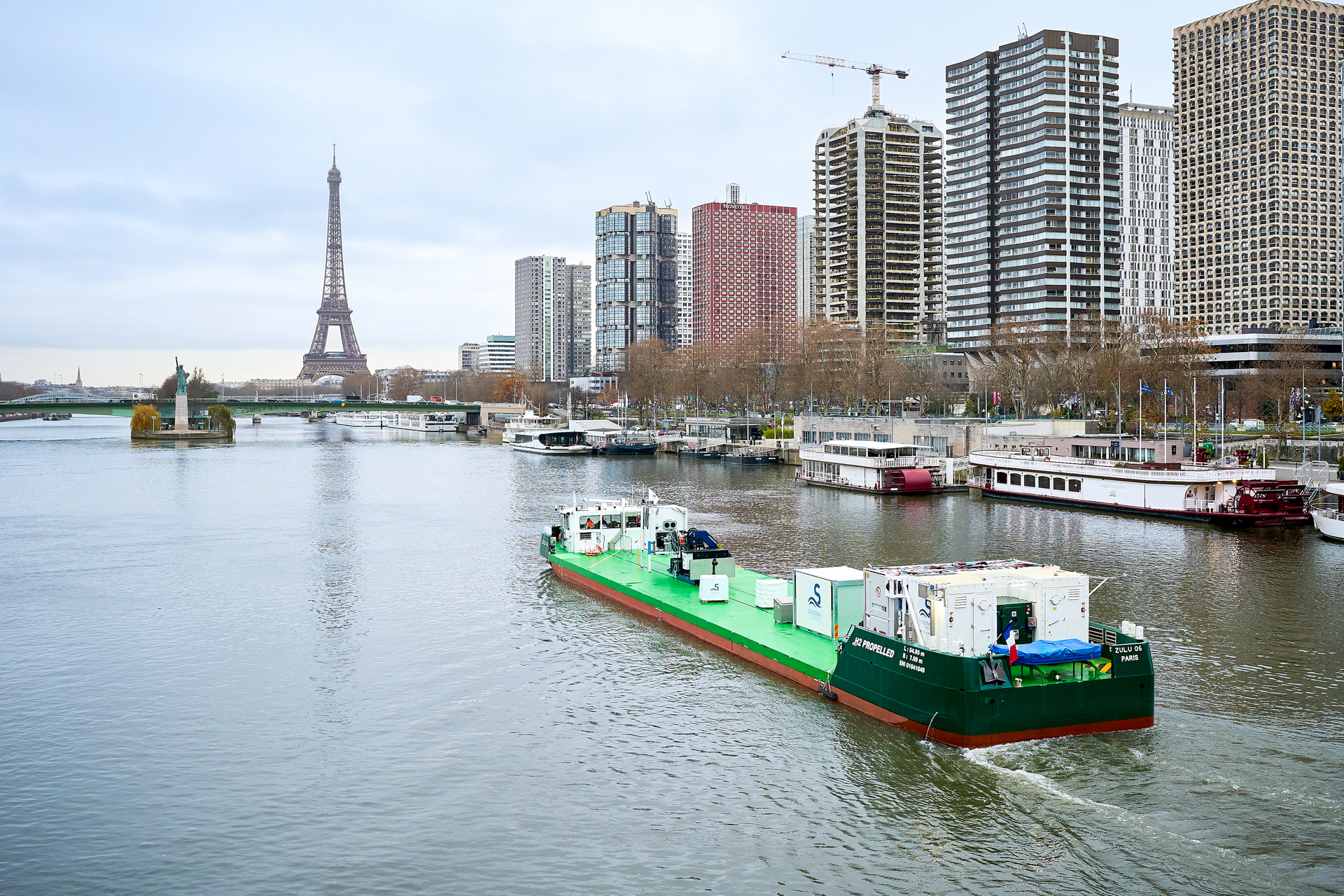
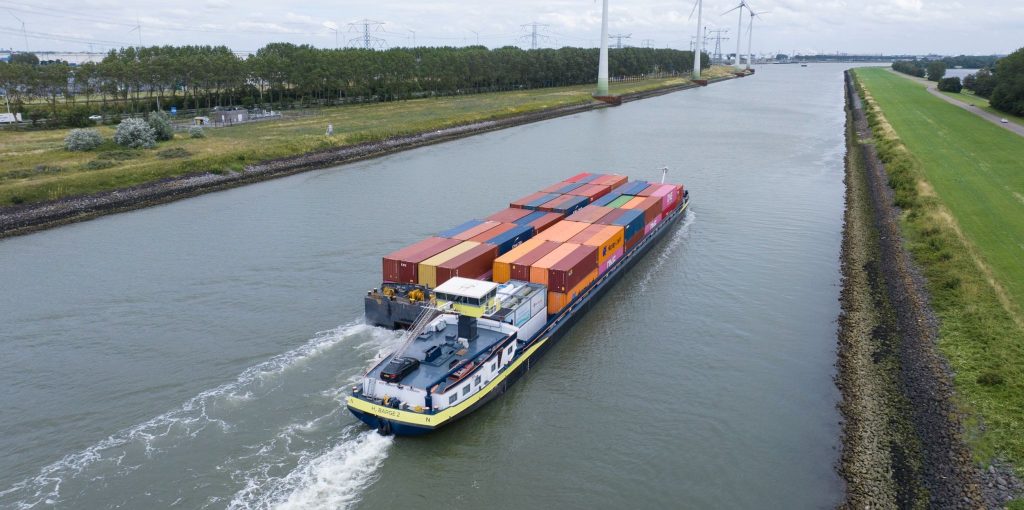
At FLAGSHIPS’ final webinar on 22 September, partners shared results from the project and its two zero-emission demonstrator vessels: H2 Barge 2 and Zulu 6, both inland cargo vessels.
“The integration of fuel cells in Zulu 6 in the heart of Paris and H2 Barge 2 in the Rotterdam area proved that zero-emission inland freight is no longer just a prototype. It is an operational reality,” said Lionel Boillot of the Clean Hydrogen Partnership in his introduction.
The demo vessels were equipped with hydrogen fuel cells and swappable containers for hydrogen storage. Both vessels secured approval through demanding case-by-case processes, helping prove the safety of the systems and inform European inland-navigation rules.
Data from more than 5000 hours of operation indicate that the demo vessels avoided around 2,400 tonnes of carbon dioxide compared with conventional diesel-powered vessels during the project demonstration period.
Beyond the vessels themselves, the project also supported the development and certification of Ballard Power Systems’ FCwave marine fuel-cell module, while ABB gained experience integrating fuel cells into a hybrid power system. This technology and know-how is now being deployed in scale-up projects like Samskip’s planned SeaShuttle feeder vessels in the North Sea.
The next challenge lies beyond the engine room. Renewable hydrogen remains expensive and difficult to secure in reliable volumes. Refuelling infrastructure and common transfer protocols are limited, approval processes can be slow, and vessel owners still carry much of the investment risk.
FLAGSHIPS does not remove those barriers, but it changes the starting point for the next projects. The question is no longer whether a fuel-cell cargo vessel can be built, approved, and operated. It is whether hydrogen supply, regulations, and investment conditions can develop quickly enough to make such vessels a repeatable commercial choice.
As FLAGSHIPS coordinator Jyrki Mikkola put it in his remarks: “The technology is ready to go; the ecosystem must now scale with it.”
The FLAGSHIPS project began in 2019 against a backdrop of limited suppliers, regulatory uncertainty and little operating experience. It also had to navigate the pandemic, supply-chain disruption, changing demonstration plans and high energy prices.
“The journey of FLAGSHIPS was not a smooth river cruise. But despite these hurdles, the vessels sailed. This is an accomplishment,” said Boillot.
“When we started, emission-free cargo shipping with hydrogen fuel cells was little more than a PowerPoint,” said Ada Martine Jakobsen, CEO of Maritime CleanTech. “Now, the project has demonstrated zero-emission operations and raised the readiness level for clean shipping in Europe.”
To access the recording of the webinar, please get in touch.